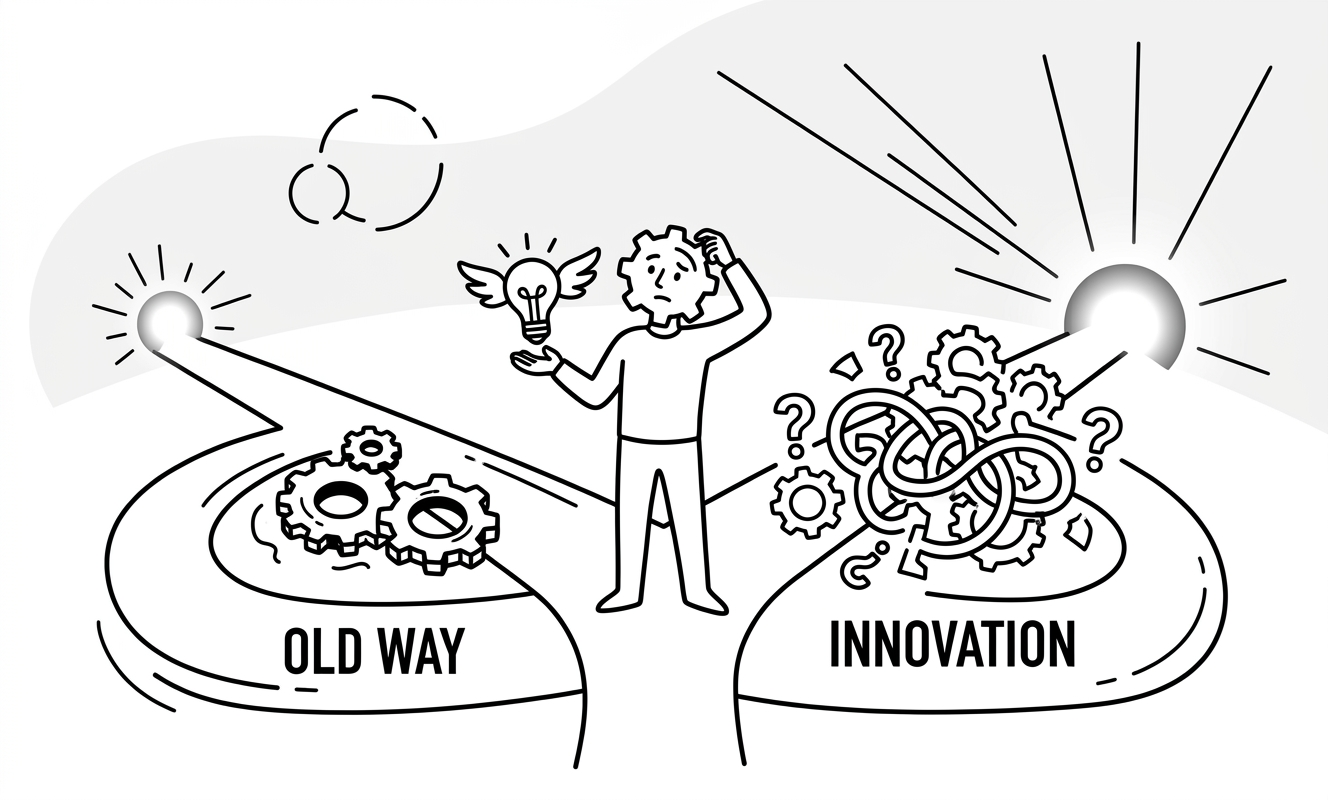
The core of a true innovation mentality lies not in a flawless track record, but in a fearless embrace of experimentation. It demands a foundational shift from a fear of failure to a curiosity about ‘what if‘. This mindset is fueled by relentless interest and staying updated, not just on technological breakthroughs, but on cross-disciplinary trends and unmet human needs. Innovation, after all, is often a novel reconfiguration of existing ideas or a simple process improvement that yields unexpectedly superior results, proving that groundbreaking change isn’t the sole domain of high-tech labs.
Today, artificial intelligence presents a fascinating paradox for this innovative spirit. On one hand, AI dramatically lowers the barrier to experimentation. Tools for rapid prototyping, data analysis, and simulation allow for Proofs of Concept (PoCs) to be built with unprecedented speed and minimal cost, effectively reducing the perceived risk of trying new things.
This democratisation of creation should, in theory, unleash a golden age of innovation. Yet, this very ease of replication breeds a new challenge: the dilution of novelty. When a promising idea can be copied and deployed globally by competitors in a matter of weeks with near-zero marginal effort, the window for maintaining a competitive advantage shrinks. The difficulty is no longer in building something once, but in sustaining uniqueness and value in a landscape where technical implementation is increasingly commoditised.
Therefore, the future of innovation shifts from pure technical invention to deeper, systemic thinking. The sustainable edge will come from superior design, deep domain expertise, unique data assets, exceptional user experience, and robust ethical frameworks—elements far harder to replicate than code. The innovator’s task becomes layering human-centric insight, strategic vision, and cultural understanding onto the powerful, but generic, capabilities provided by AI.
Ultimately, AI does not replace the need for an innovative mentality; it refines it. The core tenets remain: be curious, be bold, and learn from outcomes. However, success now requires coupling that experimental drive with a sharper focus on creating complex, integrated value that resides beyond the reach of a simple copy-paste. In this new paradigm, innovation is less about the lone ‘Eureka!’ moment and more about the intelligent, persistent orchestration of technology, process, and human insight.

13 thoughts on “The Innovation Paradox”
Comments are closed.